Recent Arizona case law has changed how community association boards may conduct executive (closed) sessions. The Arizona Court of Appeals has clarified that while executive sessions remain appropriate for limited and sensitive discussions, all board decisions must now be made in open session.
This guidance applies to both planned communities and condominiums in Arizona and is effective immediately.
What Has Changed
No voting or final decisions may occur in the executive session. Executive session is now strictly limited to discussion only.
All board action must occur in an open meeting, following the owner’s comment, even if the matter was first discussed privately.
Arizona courts have emphasized that transparency is the default and that executive session should not be used to make or finalize decisions outside of members’ view.
What Executive Sessions May Still Be Used For
Boards may still meet in executive session to discuss the following topics allowed by Arizona law:
Legal advice from the association’s attorney
Pending or contemplated litigation
Delinquent assessments, collections, or foreclosure matters
Personnel issues involving specific employees or contractors
Member violation appeals, unless otherwise requested by the applicable homeowner
While these discussions may occur privately, any resulting decision must be voted on later in an open session.
Required Meeting Flow Going Forward
When an issue qualifies for executive session:
The board may discuss the matter in an executive session (if appropriate).
The Board must wait until the open session to vote on the matter
In the open session, a motion must be made identifying the action to be taken.
Members must be allowed to comment.
The board must vote in the open session.
This sequence is required even when the topic involves legal, personnel, or enforcement matters.
Agenda Requirements (Significant Change)
Executive session agendas must now provide meaningful notice of what will be discussed.
It is no longer sufficient to list only a statute number or vague labels such as “legal,” “personnel,” or “executive session.”
Agendas should include a general description of each topic, without disclosing confidential or privileged details.
“Discussion of delinquent assessment account – potential foreclosure.”
“Owner violation appeal – ID # 7447.”
Not acceptable:
“Executive session.”
“Legal matters.”
A statutory citation with no description
Note: Meeting notices themselves (date, time, location, statutory reference) have not changed. The enhanced transparency requirement applies specifically to agendas.
Delegating Executive Session Authority
Boards may designate a person (such as the Board President or Community Manager) to determine which items qualify for executive session. This delegation should be approved in an open meeting and reflected in the meeting minutes.
Key Takeaways for Board Members
The Executive session is for discussion only
All votes and decisions must be made in open sessions.
Executive session agendas must be specific and descriptive
When in doubt, err on the side of openness and transparency
Minute-taking practices need to be adjusted (decisions will no longer be included in the executive session minutes, but the minutes will remain withheld from membership viewing)
These changes are intended to strengthen trust, clarity, and compliance with Arizona law.
A neighbor lists their home on Airbnb. By Friday night, strangers are poolside. By Monday, there are noise complaints in your inbox, and somehow, that’s your problem to solve.
If you’re on an HOA board, you’ve either been through this already or you can see it coming. Short-term rentals through platforms like Airbnb and VRBO have taken off, and boards across the country are the ones left figuring out what to do about them.
The questions we hear most often: Can we actually stop this? What should our policy say? And once we have one, how do we enforce it without it turning into a legal battle?
This guide answers all of it, written for HOA board members navigating short-term rentals in their communities.
Can an HOA Restrict Airbnb and VRBO Rentals?
In most cases, yes, but the answer starts with your governing documents, not the app.
HOAs get their authority to regulate rentals from their CC&Rs (Covenants, Conditions & Restrictions), bylaws, and associated rules. If your CC&Rs already limit properties to “single-family residential use” or set a minimum lease term, you may have more power than you realize.
Here’s something most boards don’t know: many municipalities classify rentals under 30 days as commercial use of a residential property. That means an HOA with standard residential-use language in its CC&Rs can make a strong case that Airbnb and VRBO listings violate the rules, even if those platforms are never mentioned by name.
Before your board takes any action, check four things:
Does your CC&R define rental or lease? If so, does that definition include a minimum term?
Is there a residential-use clause? “Residential purposes only” language may already cover this.
Do your rules address tenant obligations? If they don’t, that’s a gap worth closing before a violation lands on your desk.
What does your state law say? Some states limit what HOAs can restrict. Others give boards wide latitude. Your attorney can tell you exactly where you stand.
If your documents don’t support the restrictions you want, you’ll likely need a membership vote to amend them. That’s one more reason to get legal guidance before you act, not after you’ve already told homeowners what you’re planning.
How Short-Term Rentals Affect Your Community
Not every board reaches the same place on this. Many HOA communities regulate Airbnb rentals and other short-term rental activity to maintain community safety, social norms, and property values. Some communities decide short-term rentals are manageable. But when boards call us about short-term rental problems, the issues tend to cluster around the same four areas.
Community Culture and Quality of Life
People buy into association-governed communities because they want neighbors with shared expectations, people who follow the same rules and have a stake in the same outcome. Short-term guests have none of that. They don’t know the rules. They’re not accountable for what they leave behind. And they’re often there for a weekend party, not to be considerate neighbors.
The result is predictable: noise complaints stack up, parking turns into a daily argument, and residents who have lived there for years start to feel like they’re in a hotel lobby. That erosion of community character is hard to reverse once it starts.
Shared Amenities and Operating Costs
Your pool, gym, and common areas were designed and budgeted for a stable resident population. Short-term guests add unpredictable usage spikes, higher trash volumes, and faster wear on shared spaces. They don’t contribute to the cost of maintaining those spaces. Your long-term owners do.
That imbalance accumulates quietly until it shows up in your operating budget or forces a special assessment your residents weren’t expecting.
Property Values
Some owners view rental income potential as a feature. But communities where short-term rental activity goes unmanaged tend to see a different outcome: buyers who want a stable neighborhood look elsewhere, and lenders get cautious. Condominiums with a high concentration of investor-owned units can face financing restrictions, which shrink the buyer pool and put downward pressure on the value of every homeowner’s property.
Insurance and Financing Implications
Most HOA master insurance policies weren’t written with transient guests in mind. If your community has active short-term rental listings, get your coverage reviewed by the insurance providers. If a short-term guest is involved in an incident and your policy has a gap, the board finds out at the worst possible moment.
How to Draft a Short-Term Rental Policy
Getting this right from the start is far easier than trying to fix a policy that’s already in dispute. Here’s how we walk boards through it.
Step 1: Review What You Already Have
Start there before you draft anything new. Your CC&Rs, bylaws, and existing rules may already prohibit short-term rentals or set specific limits, such as restrictions on rental duration or caps on the number of rental periods allowed within the community. Reviewing these governing documents helps you identify any existing limits on short-term rentals, which means you may not need to amend anything. You may just need to enforce and communicate. Identifying gaps first shapes everything that comes next and keeps you from solving a problem you don’t actually have.
Step 2: Survey Your Community Before You Act
Boards that adopt rental policies without checking homeowner sentiment first sometimes find themselves dealing with organized pushback from owners who feel blindsided. One vocal investor with legal backing can turn a reasonable policy into a six-month fight.
A simple survey before you move tells you where the majority stands, gives dissenters a way to be heard, and makes whatever you ultimately adopt much harder to challenge. Don’t skip it.
Step 3: Choose Your Approach
There’s no universal right answer. The right fit depends on your community’s goals, your governing documents, and your homeowners’ appetite for restriction. The most common options:
Minimum lease terms: The most widely used restriction. Prohibiting rentals shorter than 30, 60, or 90 days eliminates most Airbnb and VRBO activity without banning rentals entirely. It’s defensible, easy to explain, and consistent with how many municipalities already treat short-term use.
Rental caps: Capping the percentage of homes that can be rented at any time (20% is a common threshold, meaning at least 80% of homes remain owner-occupied) protects community character and guards against the financing complications that follow when investor concentrations get too high.
Registration requirements: Require landlords to register tenants before move-in and submit complete lease agreements. You’ll know who’s in the community at any given time, and you’ll have a paper trail that matters when you need to enforce.
Tenant acknowledgment forms: Require tenants to sign a form confirming they’ve read the community’s rules. This closes the “they didn’t know” defense that comes up in nearly every enforcement conversation.
Proof of insurance: Require renter’s insurance before a tenant takes occupancy.
Full bans: Some communities prohibit all rentals, or rentals during the first year of ownership. These are the most restrictive options and require the strongest governing document foundation to withstand a challenge.
Step 4: Address Grandfathering
If owners are already renting on short-term platforms when your policy takes effect, you need a plan for how and how quickly they’re expected to come into compliance. A hard cutoff invites legal challenges. A clearly communicated transition period is more defensible and, in most cases, smoother for everyone.
Step 5: Get Legal Review Before You Adopt Anything
Before any policy goes to a vote or goes into effect, have your association’s attorney review it. Enforceability, state law, and fair housing implications all matter, and a well-intentioned policy can create real liability if the language isn’t drafted correctly.
How to Enforce Short-Term Rental Restrictions
A policy that isn’t enforced isn’t a policy. It’s a suggestion. And once homeowners figure out that there are no real consequences, enforcement becomes much harder to restore.
Consistent enforcement is what protects your community, deters future violations, and holds up when a dispute reaches a hearing or a courtroom.
Finding Violations
Short-term rental activity isn’t always visible from the street. You can search Airbnb, VRBO, and similar platforms by address or community name, and active listings appear. Resident reports are also a reliable source; neighbors notice when unfamiliar people cycle in and out of a home every weekend.
When you find something, document it immediately. Screenshots, listing dates, stated duration, pricing, and any associated complaints all become the record you’ll need if things escalate.
Responding Consistently
When a violation is confirmed, the notice goes to the property owner, not the guest. The owner is a member of the association and is responsible for their tenant’s conduct.
A consistent escalation process:
Written notice – specific description of the violation, clear deadline to cure
Fine – if the violation continues or repeats after notice
Escalating fines – for owners who keep going
Hearing – if the owner contests the violation or the pattern persists
Legal action – as a last resort, including injunctive relief where available
Consistent is the operative word. Selective enforcement, acting against some owners but not others, creates fair housing exposure and undermines your position in any dispute. Every confirmed violation gets the same response.
When It Gets Complicated
Enforcement gets messier when owners claim they never saw the policy, when a long-term tenant sublets without the owner’s knowledge, or when an owner responds with legal threats. Disputes often arise when community standards or covenants, conditions, and restrictions (CC&Rs) are unclear or not enforced. These are the situations that derail boards operating without backup.
This is where professional management makes a concrete difference. A management team that knows HOA law, keeps detailed records, and can loop in your legal counsel means you’re not improvising in high-stakes moments.
Short-term rental issues rarely resolve themselves. The boards that navigate them best share a few things in common: they act before the problem becomes entrenched, they build policies on a solid legal foundation, and they enforce consistently once those policies are in place.
If your community is just starting to see short-term rental activity, now is the right time to review your governing documents and close any gaps. If you’re already dealing with violations, the priority is getting your process consistent and documented before a dispute escalates.
Either way, looping in your HOA attorney early, before you draft, adopt, or enforce, is the single most important step your board can take. The right legal guidance at the start of this process is far less costly than trying to defend a policy that wasn’t built to hold up.
With more than 34 years of experience in property management, Sims brings a comprehensive background spanning real estate, multi-family housing, and community association management. A valued member of the AAM team for over 13 years, she has built a strong reputation for her leadership, operational expertise, and commitment to client satisfaction. Sims most recently served as Regional Director of the Peoria office before stepping into her new role in January 2026.
Throughout her career, Sims has successfully managed a wide range of community types, including multi-family residences, condominiums, townhomes, duplexes, and high-rise properties. Her experience includes guiding newly developed communities from initial construction through full build-out, as well as overseeing established associations with complex operational needs.
“Kim continually displays a strong commitment to both our people and the communities we serve,” said Amanda Shaw, President of AAM. “Her leadership style, depth of experience, and ability to build strong teams make her exceptionally well-suited for this role. I am confident she will continue to elevate our Peoria operations.”
“I’m honored to take on this new role and continue working alongside such a talented and committed team,” said Sims. “Building strong relationships with our boards and supporting our employees has always been a priority for me, and I look forward to continuing that work while helping strengthen our continued growth and success.”
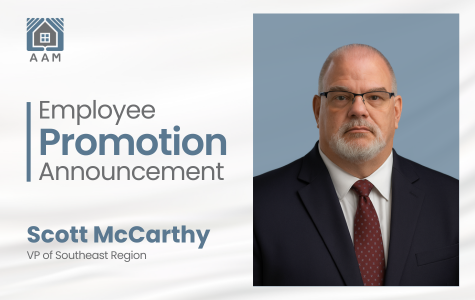
AAM, a nationally recognized leader in community association management and accounting services, is pleased to announce the promotion of Scott McCarthy to Vice President of the Southeast Region. Based in AAM’s Myrtle Beach office, McCarthy will lead regional operations, advance strategic growth initiatives, and further strengthen partnerships with Boards and communities throughout the Southeast.
McCarthy brings to AAM more than 21 years of experience in the community management industry, including 15 years of direct experience as a Community Manager. Since joining AAM in 2023, he has played an integral leadership role in the Myrtle Beach region, leveraging experience that spans from high-rise buildings to large-scale single-family home communities.
He has been instrumental in driving the Southeast Region’s continued growth, cultivating strong relationships both within AAM and with the communities it serves. Known for his collaborative approach, McCarthy actively shares ideas, supports his peers, and invests in the development of those around him, making a meaningful impact across teams and with clients.
“Scott’s promotion reflects the exceptional leadership and integrity he brings to AAM each day,” said Amanda Shaw, President of AAM. “He has strengthened our presence throughout the Southeast by creating strong partnerships, empowering his teams, and consistently delivering operational excellence. We are confident the region will continue to thrive under his leadership.”
McCarthy holds the AMS and prestigious PCAM designations through the Community Associations Institute (CAI) and earned his associate degree in business administration. He also served two years as Chairman of the CAI Grand Strand Advisory Council, supporting professional education and advocacy efforts for community association leaders across the region.
“I’m proud to step into this leadership role and continue working alongside such dedicated professionals,” said McCarthy. “The strength of our region comes from our people and the partnerships we’ve built. I’m committed to maintaining our collaborative culture while driving continued growth across the Southeast.”
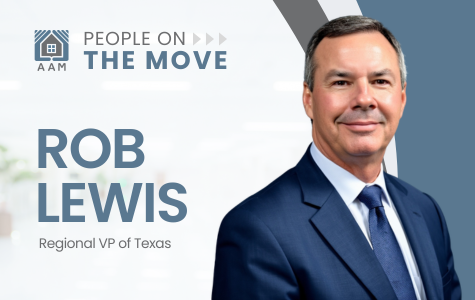
AAM is pleased to announce the appointment of Rob Lewis as Regional Vice President of the Texas Region. Based in AAM’s San Antonio office, Lewis will lead regional operations, support strategic growth, and strengthen partnerships with boards and communities throughout Texas.
Lewis brings more than 15 years of professional community management experience to his leadership role at AAM. A United States Air Force veteran and former independent business owner, he joined AAM in 2018 as a community manager, where he successfully led large-scale community portfolios and earned recognition for his strong communication skills and ability to resolve complex challenges. After serving as Vice President of AAM’s Peoria, Arizona, office, he was appointed Regional Vice President of the Texas Region in January 2026.
In his new role, Lewis will guide regional teams, enhance operational performance, and ensure communities receive the high level of service and strategic support that defines AAM. He is known for building collaborative relationships with boards and helping communities achieve long-term success.
“Rob’s leadership, integrity, and deep industry expertise make him an outstanding choice to lead our Texas Region,” said Amanda Shaw, President of AAM. “His ability to build trust with boards, develop strong teams, and navigate complex community challenges positions him to elevate our service delivery and expand AAM’s impact across Texas.”
“I am honored to take on the role of Regional Vice President for the Texas Region,” Lewis said. “AAM’s commitment to operational excellence and client partnership aligns with my own leadership philosophy. I look forward to supporting our Texas teams and boards as we continue delivering exceptional service and strengthening the communities we serve.”
AAM is pleased to announce that Alex Vasquez has joined the organization as Director of Client Services, supporting strategic growth and client partnerships across the Arizona market.
Vasquez brings over a decade of experience in HOA management, finance, and customer service to AAM. With expertise in asset management, resource planning, data analytics, and vendor oversight, he pairs deep operational knowledge with a talent for building meaningful connections with Board members. Vasquez is dedicated to guiding communities through the selection of the ideal management partner, ensuring both strategic success and strong, lasting partnerships.
As Director of Client Services, Vasquez will lead AAM’s sales initiatives and drive strategic growth across Arizona, actively championing the company’s value to prospective communities. He will focus on expanding AAM’s presence statewide by ensuring that every association, current and future, benefits from AAM’s industry-leading expertise, exceptional service, and tailored support.
“Alex brings a wealth of industry knowledge and a proven ability to build strong, enduring partnerships with Boards and communities,” said Amanda Shaw, AAM President. “His expertise, coupled with his focus on helping communities understand and experience the value AAM delivers, makes him a tremendous asset to our Arizona team and a key driver of our continued growth in the market.“
Before starting his community management career, Vasquez’s professional background includes roles such as Senior Mortgage Banker at VIP Mortgage in Scottsdale, where he guided homeowners through financing solutions; Graduate Research Assistant at Harvard University, supporting real estate research and data analysis; and Contractor Relations Assistant Manager at First American Financial Corp., overseeing vendor procurement and contract negotiations.
“I’m honored to join AAM and excited to contribute to the company’s growth and client-first culture,” said Vasquez. “AAM has built an exceptional reputation in Arizona by combining strong operational excellence with genuine care for the communities it serves. I look forward to working with our teams and Boards to continue elevating the client experience.“
Vasquez holds a Master’s degree in Business Management from Harvard University and a Bachelor’s degree in Business Management from Grand Canyon University. He obtained his CAAM designation through the Arizona Association of Community Managers (AACM) and, in 2015, was honored as Manager of the Year, recognizing his leadership and commitment to excellence in community management.
Associated Asset Management (AAM), a nationally recognized provider of community association management and accounting services, is once again a Certified™ Great Place To Work® organization. This marks the second consecutive year AAM has earned the achievement, which is based solely on direct feedback from employees about their workplace experience.
In this year’s survey, 85% of AAM employees reported that the company is a great place to work.
Great Place To Work® is the global authority on workplace culture and employee experience, recognizing organizations that demonstrate leadership behaviors proven to drive strong business results, employee retention, and innovation.
“Great Place To Work Certification is a highly coveted achievement that requires consistent and intentional dedication to the overall employee experience,” says Sarah Lewis-Kulin, the Vice President of Global Recognition at Great Place To Work. She emphasizes that Certification is the sole official recognition earned by the real-time feedback of employees regarding their company culture. “By successfully earning this recognition, it is evident that AAM stands out as one of the top companies to work for, providing a great workplace environment for its employees.”
“Being Certified as a Great Place to Work for the second year in a row is incredibly rewarding,” said Amanda Shaw, President of AAM. “Our employees are at the heart of everything we do, and this recognition reflects the culture we have built together. I am grateful for the passion, professionalism, and dedication our team brings to AAM every day.”
AAM’s commitment to its employees is reflected in its focus on wellness, growth, and opportunity. The company offers a comprehensive benefits package and wellness initiatives designed to support healthy lifestyles while helping employees reduce monthly health insurance costs. AAM also prioritizes professional development by investing in internal training, external education, and industry certifications, while encouraging career advancement through internal promotion opportunities.
According to Great Place to Work research, job seekers are 4.5 times more likely to find an outstanding boss at a certified Great Place to Work. Additionally, employees at Certified organizations are 93% more likely to look forward to coming to work and are twice as likely to feel they are paid fairly, receive a fair share of the company’s profits, and have equal opportunities for promotion.
WE’RE HIRING! Looking to grow your career at a company that puts its people first? Visit our careers page.
Whether you’re new to a homeowners association (HOA) or a longtime resident, living in a homeowners’ association offers unique opportunities and responsibilities. From understanding your governing documents to connecting with neighbors, these ten tips will help you make the most of HOA living and enjoy the full benefits of your community.
When you purchased your home, you received governing documents such as the Declaration of Covenants, Conditions & Restrictions (CC&Rs) and the Architectural/Landscape Guidelines. These guidelines provide a clear understanding of community standards and homeowner responsibilities, helping you enjoy your home and neighborhood.
2. Get to Know Your HOA Management Company
Most associations partner with a professional HOA management company to support the Board and serve homeowners. Take time to familiarize yourself with your management team and the resources they provide. Many communities now offer digital tools—such as homeowner portals or mobile apps like AAM All Access—to provide 24/7 access to account details, documents, and updates.
3. Connect with Neighbors and Get Involved
One of the greatest benefits of HOA living is the sense of community. Attend neighborhood events, volunteer on a committee, or participate in a block watch program that promotes safety and connection. Building relationships not only creates lasting friendships but also strengthens the fabric of your community.
4. Attend Board and Annual Meetings
Community meetings are where important decisions are made. Attending Board or annual meetingsallows you to stay informed, share your ideas, and raise concerns. It’s also a chance to understand better how decisions impact your neighborhood—and, if you’re interested, to run for a Board positionyourself. Tools like BoardVue make it easier than ever for Board members to collaborate and for homeowners to stay engaged.
5. Respect Your Neighbors and Shared Spaces
A successful community thrives on courtesy. Be mindful of parking rules, pet noise, and the neighborhood’s quiet hours in general. Simple actions—such as keeping common areas tidy and respecting your neighbors’ property—go a long way toward creating a welcoming and harmonious environment.
6. Submit Architectural Changes for Approval
Thinking of adding a patio, painting your home, or updating landscaping? Submit your plans to the homeowners’ association architectural committee before beginning work. This ensures updates align with guidelines and avoid costly changes later. By following the process, you’ll keep your project stress-free while supporting the community’s overall look and feel.
7. Maintain Curb Appeal
From neatly storing trash receptacles to caring for lawns and landscaping, small actions make a big difference. HOAs often conduct routine inspections to help preserve property values and ensure the association looks its best. By staying on top of maintenance, you’ll not only avoid compliance issues—you’ll contribute to neighborhood pride.
8. Enjoy Community Amenities Safely
If you’re living in a homeowners association that offers amenities such as pools, playgrounds, or fitness centers, use them responsibly. Keep an eye on children around water features or play areas and follow posted guidelines. When everyone uses the community’s common areas with care, they remain safe, enjoyable, and well-maintained for years to come.
9. Be a Responsible Pet Owner
Pets are part of the family, and responsible ownership keeps your community associations clean and comfortable. Always clean up after your dog, especially in shared areas, and follow leash or noise policies. These small steps show respect for your neighbors and keep common spaces pleasant for all residents.
10. Take Pride and Stay Engaged
Your HOA management company and Board are here to help, but every homeowner plays a role in protecting the community. Stay alert, report maintenance issues promptly, and use tools like AAM All Access to communicate with your management team. When everyone participates, your neighborhood becomes more than a place to live; it becomes a community to be proud of.
A successful HOA strikes a balance between structure, communication, and community spirit. With the right knowledge—and tools like AAM All Access to keep you connected—you’ll enjoy the full benefits of HOA living while helping your neighborhood flourish. And don’t forget to attend meetings. 😉
Is your HOA financially prepared for the future? Engaging in proactive financial planning is essential for ensuring the long-term financial stability of the community. A financial strategy that includes a regularly updated reserve study helps an HOA manage major repairs and replacements while minimizing unexpected special assessments or extreme assessment increases for homeowners.
We are going to break down five reasons why reserve fund planning can prevent costly surprises, improve decision-making, and secure your HOA’s long-term stability.
1. Avoid Costly Surprises
A properly managed reserve fund protects the association from the unexpected. A reserve study is a detailed report created by third-party industry experts. The study is a professional analysis that evaluates the useful life and replacement costs of the HOA’s common components. This tool serves as a guide to help the Board anticipate significant and irregular expenses such as roof replacements, road repaving, renovations, and periodic major repairs to shared amenities. Following the study’s recommended funding plan ensures the community savings plan aligns with future projected costs, reducing the risk of extreme measures such as special assessments or steep increases that frustrate homeowners.
2. Improve Budget Accuracy
Routine Reserve Studies support financial projections with real data based on industry-wide analysis. This improves budgeting accuracy, helping annual budgets remain accurate and predictable while the costs of material and labor change. Studies consider important variables such as inflation and possible interest earnings. This allows the Board to make confident, well-informed financial decisions for the community in the short and long term.
3. Extend the Lifespan of Community Assets
Planning ahead is cheaper than reacting later. Strategic component replacement schedules, guided by reserve study recommendations, can reduce replacement costs over time. By prioritizing spending on components at the proper time, your HOA gets more value from every dollar.
4. An HOA Reserve FundStrengthens the HOA’s Value
Financially stable HOAs are more attractive to both buyers and lenders. During the purchase of a home, the HOA must provide a disclosure statement that includes the amount of money in the reserve fund. This demonstrates the HOA’s level of financial preparedness to support ongoing maintenance or replacement of its common-area components. When a community has a strong reserve fund, it indicates responsible leadership and potential long-term sustainability.
5. Build Homeowner Confidence
Transparency matters. When Boards share Reserve Study updates along with information about the community’s reserve funding, homeowners see that their finances are being managed with care and foresight, building trust and appreciation for the HOA.
Sound financial planning is not just about reliable numbers; it is about protecting the future of your community. A Reserve Study provides a roadmap, showing what is coming, what it will cost, and how to plan wisely. Without one, communities risk falling into a pattern of reacting to problems instead of preventing them. This can mean surprise expenses, delays in executing projects, potential harm to home values, and homeowner frustration. The same goes for Reserve Funding—consistent, data-driven contributions today protecting your community from financial stress tomorrow.
If reserve planning, capital forecasting, or vendor management becomes complex, boards often partner with a management firm for structured financial reporting and compliance assurance
At AAM, we make the process simple by helping Boards turn data into clear, realistic plans that keep homeowners informed and confident. With thoughtful reserve planning and open communication, your community stays strong today and for years to come.
Related HOA Reserve Funding and Capital Planning Resources
AAM, a nationally recognized leader in community association management and accounting services, proudly celebrates its 35th anniversary this year. Since 1990, AAM has partnered with Boards, supported homeowners, and strengthened communities across the country, while establishing itself as one of the industry’s most trusted and forward-thinking management firms.
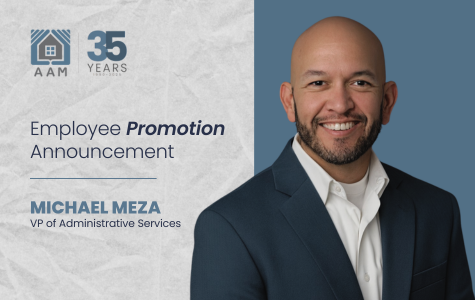
Marking this milestone, AAM is pleased to announce the promotion of Michael Meza to Vice President of Administrative Services. With 18 years of service at AAM, Michael’s career reflects the company’s culture of developing and elevating long-tenured employees whose dedication and expertise have fueled AAM’s growth. In his new role, Michael will oversee several critical business areas, including administrative operations, insurance partnerships, contract administration, onboarding and transition, training, customer care, and transfers and disclosures.
“Michael’s promotion reflects the strength of our internal talent and the values we’ve upheld for 35 years,” said Amanda Shaw, President of AAM. His leadership and operational expertise will be instrumental as we continue to grow and innovate. We’re excited to welcome him to the Executive Team during such a pivotal moment in our company’s history.”
Elaine Anghel, Chief Operating Officer of AAM, added: “Michael exemplifies the leadership qualities that drive AAM forward. His ability to lead with integrity and deliver results aligns perfectly with our mission to serve communities with care and professionalism. We are confident he will bring tremendous value to our executive leadership and the communities we support.”
As AAM reflects on this milestone and looks to the future, the company remains committed to its mission—leading with integrity, investing in its people, and delivering innovative solutions that strengthen communities nationwide.